Is It Bad to Dry Fire a Gun? What You Need to Know Before Pulling the Trigger
Is it bad to dry fire a gun? Learn which firearms are safe to dry fire, which ones will suffer damage, and how to practice safely according to firearms experts.
INFORMATION
Dan
6/12/20264 min read
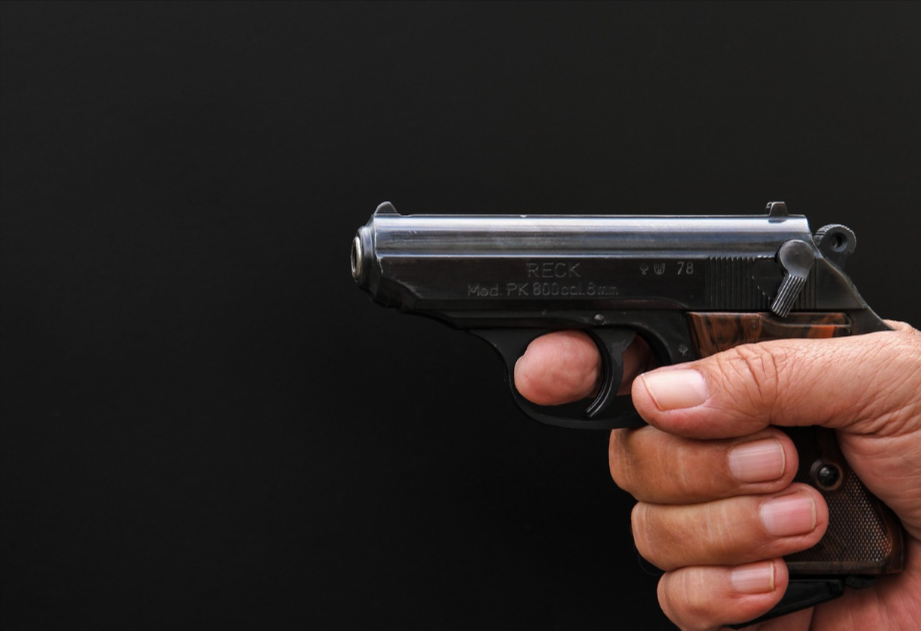
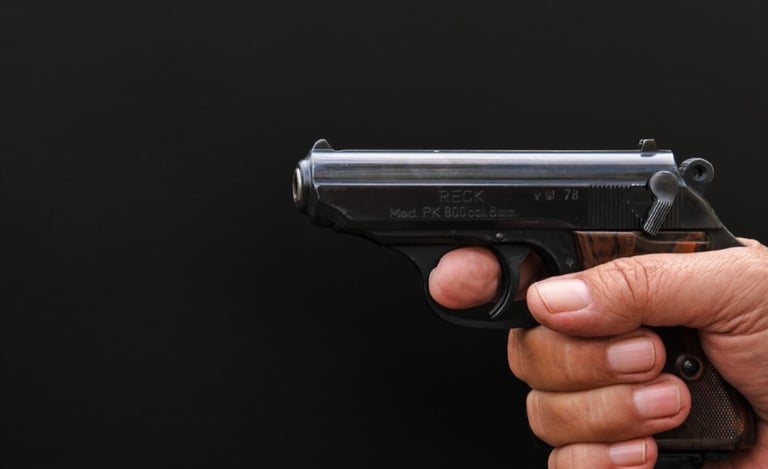
Is dry firing a gun bad for it? In most cases, no. Dry firing is generally safe for modern centerfire firearms and is often used for training, trigger control practice, and familiarization. However, some rimfire firearms and older gun designs can be damaged by repeated dry firing, making it important to understand the differences before making it a regular habit.
Key Takeaways:
Centerfire is safe: Most modern centerfire pistols, rifles, and shotguns can be dry fired safely without any structural risk.
Rimfire is risky: Dry firing a rimfire firearm (like a .22 LR or .22 Magnum) can ding the chamber face and destroy the firing pin.
Snap caps are cheap insurance: Using dummy rounds protects internal components across all platform types during extended practice.
Massive training value: Dry fire is one of the most effective, cost-free ways to build muscle memory and improve trigger control.
Which Guns Are Safe to Dry Fire?
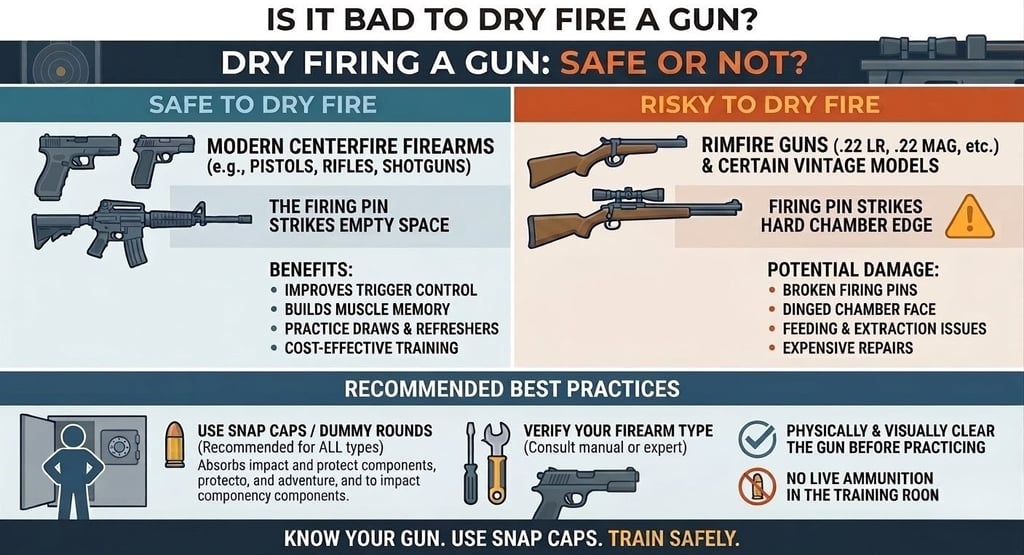
Most modern centerfire firearms are completely safe to dry fire because the firing pin strikes empty air inside the primer pocket. Striker-fired pistols like Glocks, Smith & Wesson M&Ps, and modern rugged revolvers can handle thousands of dry fire repetitions without experiencing any mechanical degradation or structural fatigue.
The distinction comes down to the design of the firing mechanism. Centerfire firing pins are designed to hit a primer located in the direct center of the cartridge casing. When no cartridge is present, the pin simply extends into the empty space of the chamber without striking steel.
If you are training with modern defensive handguns, dry firing is a standard, manufacturer-approved practice. It allows you to master the break and reset of your trigger without wasting expensive ammunition.
Why Is Dry Firing Bad for Rimfire Guns?
Dry firing a rimfire gun is bad because the firing pin is positioned to strike the outer rim of the cartridge. Without a brass casing in place to cushion the blow, the hardened steel firing pin strikes the hard steel edge of the chamber face directly, causing immediate or cumulative damage.
Every time the trigger pulls on an empty rimfire chamber, it creates a steel-on-steel impact. Over time, this impacts the firing pin, causing it to chip, bend, or snap entirely.
Furthermore, this repeated impact creates a burr or "ding" on the edge of the chamber face. This structural damage can make it incredibly difficult to chamber a new round or cause major extraction failures during live fire.
How Do You Safely Practice Dry Firing?
To safely practice dry firing, you must clear all live ammunition from the room, inspect the chamber visually and physically, and utilize high-quality snap caps. Snap caps feature a spring-loaded or rubberized dummy primer that absorbs the impact of the firing pin, protecting the firearm's internal springs and pins.
Safety is the absolute priority before your finger ever touches the trigger. Always establish a dedicated practice space where live ammunition is completely banned from the room.
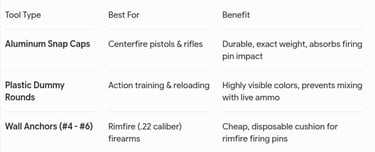
Using these tools allows you to practice complex drills, such as drawing from a holster or clearing malfunctions, with total peace of mind.
My Perspective:
In my experience, dry fire is the single most underutilized tool for building pure shooting proficiency. What I found when I tested my own habits over the years is that regular dry fire practice does more for managing trigger flinch than firing hundreds of live rounds at the range. It allows you to isolate your mechanics—focusing entirely on a clean, straight-back trigger press without the distraction of recoil or muzzle blast.
That said, you have to know your specific equipment. While I don't hesitate to dry fire my centerfire defense setups, I am incredibly protective of my rimfire platforms. If you are practicing with a .22 Magnum revolver or a rimfire rifle, never drop that hammer on an empty chamber. Spending a few bucks on a pack of snap caps or even properly sized plastic drywall anchors to cushion the pin is cheap insurance compared to a trip to the gunsmith.
FAQs About Dry Firing:
Can you dry fire a shotgun?
Yes, most modern centerfire shotguns can be dry fired safely. However, older double-barrel shotguns or models with floating firing pins can suffer internal stress, so using a dummy gauge shell is highly recommended.
Does dry firing break the firing pin?
It will not break the firing pin on a modern centerfire gun, but it absolutely can snap or chip the firing pin on a rimfire gun due to the metal-on-metal impact against the chamber wall.
What is the point of dry firing?
Dry firing builds muscle memory, improves sight alignment, and helps eliminate the habit of flinching before a shot. It is a cost-effective way to perfect your trigger control without spending money on live ammunition.
Before attempting any dry fire practice, you must absolute commit to the core rules of firearm safety. Dry firing is a highly effective training method, but it demands a strict, zero-compromise clearing protocol to ensure a live round is never introduced into your practice space.
⚠️ Crucial Safety Disclaimer :
Always practice strict firearm safety and treat every weapon as if it is loaded. Before you ever place your finger on the trigger to dry fire, you must physically and visually inspect the chamber, magazine well, and breech face to verify the firearm is 100% clear.
Remove all live ammunition from your training room entirely, choose a designated safe direction as a backstop, and double-check your firearm every single time you pick it up. Never skip these steps—complacency is the enemy of safety.
Subscribe newsletter
or Email us at: DerringerDan@Snakebite.com
For Advertising information: 941-876-8332
425 Montague ln. Northport, FL 34287