
What Is Grain in Ammo? A Guide to Bullet Weight
Understanding what is grain in ammo. Learn how grain weight affects recoil, velocity, and stopping power. 115gr vs. 124gr vs. 147gr: Which Ammo Grain Is Best for You?
INFORMATION
Dan
5/3/20263 min read


Grain in ammunition refers to a unit of measurement for weight—specifically 1/7,000 of a pound—used to quantify the mass of the bullet (projectile) and the propellant (powder) charge.
Key Takeaways
Mass, Not Quantity: A higher grain count means a heavier bullet, not more "grains" of powder.
The 7000 Rule: There are exactly 7,000 grains in one pound ($1 \text{ lb} \approx 453.6 \text{ grams}$).
Performance Impact: Grain weight directly influences recoil, trajectory, and terminal energy.
Precision Matters: It is the standard unit for reloading because it allows for granular accuracy that grams cannot easily provide.
Why is ammo measured in grains instead of grams?
Ammunition is measured in grains because it is a traditional apothecary unit that allows for extreme precision in small-scale measurements. Since a single grain is only about 64.8 milligrams, it provides a specialized scale for fine-tuning ballistic performance without resorting to awkward decimals.
In my years of testing various loads at the range, I’ve found that even a 2-grain difference in powder can be the margin between a tight group and a blown primer. While the rest of the world moved to the metric system, the ballistics industry stuck with grains because the math just "works" for the scale of a cartridge.
It’s important to distinguish between Bullet Weight (the projectile) and Powder Charge (the propellant). When you see "115 Grain" on a 9mm box, that refers exclusively to the weight of the lead/copper projectile hitting the target.
How does bullet grain weight affect your shooting?
Bullet grain weight determines the balance between velocity and felt recoil; heavier bullets (high grain) typically travel slower but carry more momentum, while lighter bullets (low grain) fly faster with a flatter trajectory. Choosing the right grain depends on your firearm's twist rate and your specific intended use.
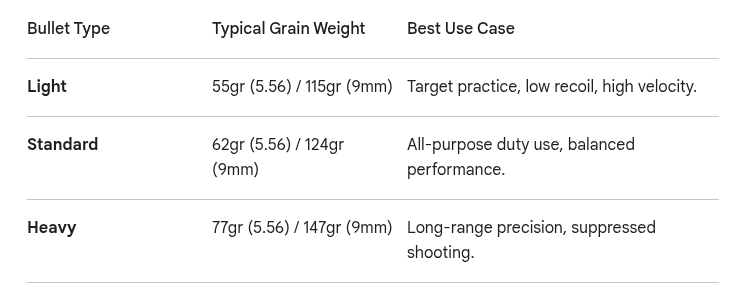
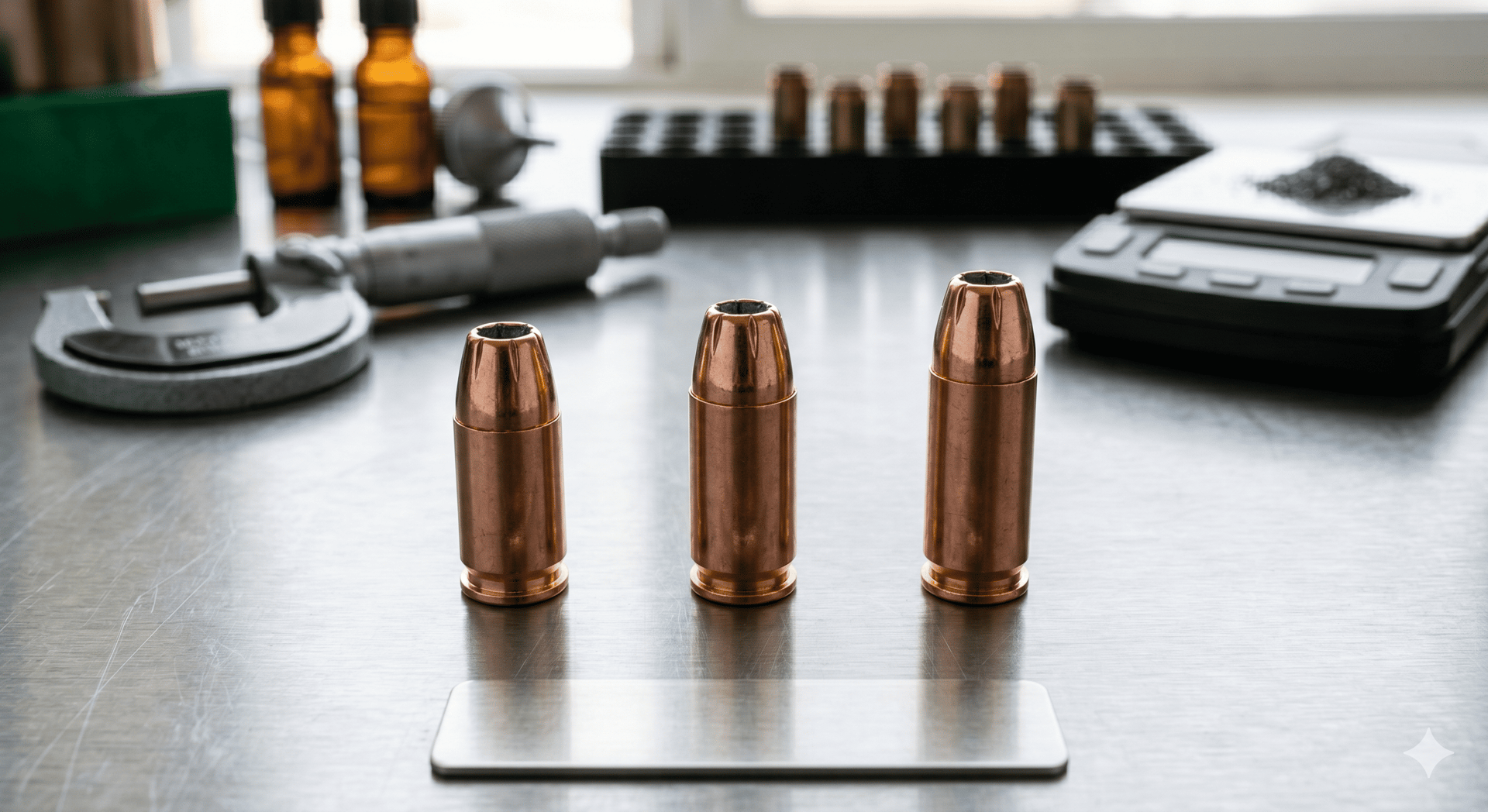
When I tested 147-grain 9mm rounds against standard 115-grain loads, the difference in "push" versus "snap" was immediate. The heavier 147-grain bullet feels like a dull thud, making it a favorite for competitive shooters who want to stay on target for follow-up shots.
Does a higher grain mean more "power"?
Higher grain does not automatically mean more power; rather, it indicates higher mass, which results in more kinetic energy upon impact at the cost of speed. A "hot" load (more powder) can make a light grain bullet more powerful than a heavy one, so power is a result of the relationship between mass and velocity.
Kinetic Energy Formula: Remember that Ek= 1/2 MV²?. (Me either really...)
Velocity is King: Since velocity is squared, doubling the speed of a light bullet adds more energy than doubling the weight of a slow one.
Momentum: Heavier grains excel at penetration because they are harder to stop once they are moving.
Expert Perspective: The "Twist Rate" Trap
In my experience, the biggest mistake new shooters make is ignoring their barrel’s twist rate when choosing a grain weight. I once spent a frustrated afternoon trying to stabilize 77-grain SMK bullets in a vintage rifle with a 1:12 twist barrel.
The bullets were "keyholing"—hitting the paper sideways—because the barrel wasn't spinning the heavy mass fast enough. If you’re moving to "heavy-for-caliber" grains, always verify that your rifling is fast enough (e.g., 1:7 or 1:8 for heavy .223) to handle that extra weight. Don't just buy the heaviest grain thinking it's "better"; buy what your hardware can actually stabilize.
FAQ: Common Questions About Grain in Ammo
Does 115 grain or 124 grain have more recoil?
Generally, 124-grain ammo has a slightly "heavier" feel, but 115-grain often feels "snappier" because it exits the barrel at a higher velocity. Most shooters find 124-grain to be the "sweet spot" for modern handguns.
Is grain the same as the number of gunpowder flakes?
No. Grain is a unit of weight (64.8 mg), not a count of the physical pieces of gunpowder.
Can I use any grain weight in my gun?
As long as the caliber matches, your gun will fire it, but the accuracy will vary. Check your manufacturer's manual to see if they recommend a specific grain for optimal cycling and reliability.
Why is heavy grain ammo better for suppressors?
Heavy bullets (like 147gr 9mm or 220gr .300 Blackout) stay below the speed of sound (< 1,125 fps.). This prevents the "sonic crack," making the shot much quieter when used with a silencer.
Subscribe newsletter
or Email us at: DerringerDan@Snakebite.com
For Advertising information: 941-876-8332
425 Montague ln. Northport, FL 34287