
.45 ACP: Power, Performance, and Versatility
Discover the power and versatility of .45 ACP ammunition. Explore its rich history, impressive performance, and diverse applications in various shooting scenarios.
AMMUNITION
Derringer Dan
7/7/20237 min read
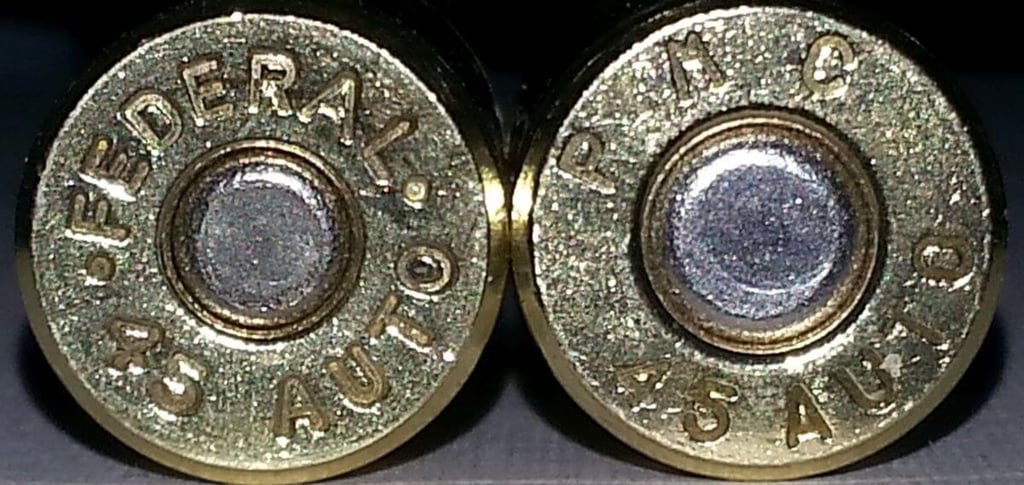
When it comes to handgun cartridges, few can match the reputation and stopping power of the .45 ACP. In this comprehensive blog post, we will delve deep into the history, variants, applications, performance characteristics, comparisons, and interesting facts about .45 ACP ammunition. By gaining a thorough understanding of this iconic cartridge, you'll be equipped to make informed decisions when choosing ammunition for your .45 ACP firearms.
A Brief History of the .45 ACP:
Developed by John Browning for Colt in the early 1900s, the .45 ACP was designed to meet U.S. military requirements for a more effective handgun cartridge. It was adopted in 1905 and later became famous through the M1911 pistol. Browning, a renowned firearms designer, sought to create a powerful and effective cartridge for military use. His creation, the .45 ACP, quickly gained popularity and became the standard sidearm cartridge for the United States Armed Forces for around 80 years or so.
The .45 ACP features a large, heavy bullet with a diameter of .451 inches (11.45mm) and delivers impressive stopping power. Its design aimed to provide soldiers with a cartridge that could effectively neutralize threats in close-quarters combat. The .45 ACP's reputation for reliability and effectiveness made it a favorite among military personnel and law enforcement officers worldwide.
The .45 ACP also became famous through firearms such as the Thompson submachine gun during the Prohibition era and World War II. While the Thompson helped popularize the cartridge, the .45 ACP is most closely associated with the Colt M1911 pistol, which served as the standard U.S. military sidearm for decades.
Variants of .45 ACP Ammunition:
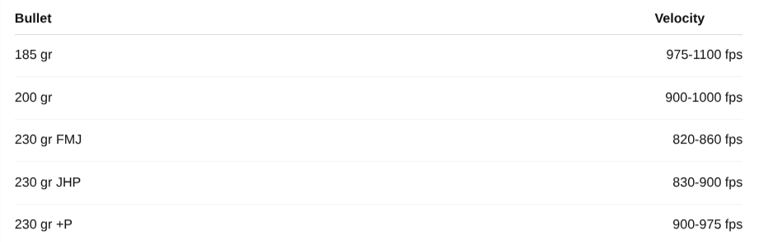
Standard .45 ACP: The standard .45 ACP ammunition typically uses a 230-grain bullet, although bullet weights ranging from 160 to 230 grains are commonly available. The cartridge operates at a moderate velocity, striking a balance between manageable recoil and terminal ballistics, making it suitable for various applications.
.45 ACP +P: Labeled as ".45 ACP +P," this variant offers higher pressure loads, resulting in increased velocity and muzzle energy. It delivers a notable boost in performance, making it ideal for self-defense applications where enhanced defensive effectiveness is desired. However, it is essential to consult your firearm's specifications to ensure it can safely handle +P ammunition.
Subsonic .45 ACP: Subsonic .45 ACP ammunition is loaded with heavier bullets and operates at velocities below the speed of sound. It is popular among shooters who prioritize reduced noise and recoil, making it suitable for suppressed firearms or those who prefer a quieter shooting experience. Subsonic loads often have bullet weights around 200 to 230 grains.
Frangible .45 ACP: Frangible ammunition is designed to disintegrate upon impact with hard surfaces, reducing the risk of over-penetration and ricochets. These rounds are commonly used in shooting ranges, close-quarters training scenarios, and other environments where safety is a priority.
Applications of .45 ACP: The .45 ACP cartridge finds widespread use across various applications, including:
Self-Defense: With its larger bullet diameter and heavier weight, the .45 ACP is known for its exceptional stopping power. It delivers significant energy transfer upon impact, making it a popular choice for self-defense purposes. The combination of a large caliber and sufficient bullet weight creates wide wound channels and devastating terminal ballistics, increasing the likelihood of stopping a threat effectively.
Law Enforcement: Many law enforcement agencies have historically favored the .45 ACP for its penetration and proven track record. While its recoil can be more substantial than other calibers, proper training and practice help officers harness its full potential. The .45 ACP's effectiveness in close-quarters encounters and its ability to incapacitate threats quickly make it a reliable choice for law enforcement officers.
Military: The .45 ACP has a storied military history, having served as the standard-issue sidearm cartridge for the United States Armed Forces for several decades. Its effectiveness in close-quarters combat and terminal performance have made it a reliable choice for military personnel. Although some military units have transitioned to other calibers in recent years, the .45 ACP's reputation as a powerful and reliable cartridge remains intact.
Target Shooting: The .45 ACP's inherent accuracy and manageable recoil make it a favorite among target shooters. Whether engaging in precision shooting or practical shooting competitions, the .45 ACP offers a satisfying shooting experience. The cartridge's larger bullet size and weight can contribute to improved accuracy and enhanced feedback for shooters.
Hunting: Although not commonly considered a hunting cartridge, the .45 ACP can be used for close-range hunting of small game or feral hogs where legal and with appropriate loads. More powerful handgun cartridges are generally preferred for hunting larger game.
Performance Characteristics of .45 ACP: The .45 ACP ammunition offers remarkable performance characteristics, including:
Stopping Power: The .45 ACP's larger bullet diameter and weight contribute to its remarkable stopping power. It delivers substantial energy upon impact, creating devastating wound channels and increasing the likelihood of incapacitating an assailant. The cartridge's ability to transfer energy efficiently is a key factor in its effectiveness.
Recoil and Control: Due to the larger bullet and corresponding powder charge, the .45 ACP typically produces more recoil than smaller caliber rounds. However, with proper grip, stance, and training, shooters can learn to manage the recoil effectively. Recoil management techniques, combined with regular practice, help shooters maintain control and accuracy while firing .45 ACP firearms.
Terminal Ballistics: The .45 ACP generally operates at lower velocities than cartridges such as the 9mm or .357 SIG. Modern defensive hollow points are designed to provide reliable expansion while still meeting accepted penetration standards.
Today, many shooters choose modern defensive loads that are engineered for reliable expansion and consistent penetration. Popular .45 ACP self-defense ammunition includes Federal HST, Speer Gold Dot, Hornady Critical Duty, Hornady Critical Defense, Winchester Ranger-T (where available), and Remington Golden Saber. These loads have earned strong reputations among law enforcement agencies and civilian shooters for dependable terminal performance.
Comparisons: Let's compare the .45 ACP to other popular handgun cartridges to understand its unique characteristics:
.45 ACP vs. 9mm Luger: The .45 ACP offers greater bullet diameter and weight, resulting in increased stopping power compared to the 9mm Luger. The larger bullet size of the .45 ACP contributes to wider wound channels and potentially more devastating terminal ballistics. However, the 9mm Luger offers higher magazine capacity, reduced recoil, and faster follow-up shots. The choice between the two depends on personal preference, intended application, and individual shooting skills.
.45 ACP vs. .40 S&W:The .45 ACP vs. .40 S&W comparison presents an interesting debate. The .40 S&W is a compromise between the 9mm Luger and .45 ACP, offering a balance of bullet diameter, weight, and recoil. While the .45 ACP delivers greater stopping power, the .40 S&W provides increased magazine capacity and manageable recoil. Shooters should consider factors such as terminal ballistics, personal shooting proficiency, and specific application requirements when deciding between the two cartridges.
Interesting Facts about .45 ACP:
Magazines and Firearms: The .45 ACP's larger bullet diameter necessitates wider magazines and firearms with corresponding dimensions. Many handguns chambered in .45 ACP are known for their robust build and solid construction to handle the cartridge's power.
Competition Shooting: The .45 ACP has found success in practical shooting competitions, such as IPSC (International Practical Shooting Confederation) and USPSA (United States Practical Shooting Association). Shooters appreciate its reliability, accuracy, and ability to deliver strong hits on steel targets.
Recoil Characteristics: Due to the .45 ACP's larger bullet and powder charge, it generally generates more recoil compared to smaller calibers. However, modern firearm designs and advances in recoil management techniques have made shooting .45 ACP firearms more manageable, even for shooters with less experience.
Handloading: Handloading or reloading .45 ACP ammunition allows shooters to customize their loads for specific purposes. From selecting different bullet weights and designs to experimenting with various powders and primers, handloading offers a level of versatility and customization that can enhance performance and accuracy.
Historical Significance: The .45 ACP played a significant role in several historical events, including both World Wars. It was the cartridge of choice for the legendary Colt 1911 pistol, which saw widespread use by U.S. troops. Its reliability, stopping power, and popularity among soldiers cemented its place in firearms history.
Frequently Asked Questions About .45 ACP
Is .45 ACP good for self-defense?
Yes. The .45 ACP has been trusted for self-defense for more than a century. Modern jacketed hollow point (JHP) ammunition provides reliable expansion and penetration, making it a popular choice for personal protection. While it produces more recoil than some smaller handgun cartridges, many shooters appreciate its large bullet diameter and proven defensive performance.
Is .45 ACP more powerful than 9mm?
In terms of bullet size and weight, yes. The .45 ACP typically fires heavier bullets with a larger diameter, while the 9mm generally offers higher velocity, greater magazine capacity, and less recoil. Both cartridges are effective defensive options when paired with quality ammunition and proper shot placement.
Does .45 ACP have more recoil than 9mm?
Generally, yes. Most shooters find the .45 ACP produces a heavier, slower "push," while the 9mm has a sharper but lighter recoil impulse. Individual experience varies depending on the firearm's size, weight, and design.
Is .45 ACP still used by the military?
While the U.S. military largely transitioned to the 9mm in the 1980s, the .45 ACP is still used by some specialized military and law enforcement units around the world. It also remains extremely popular among civilian shooters.
Is .45 ACP good for concealed carry?
Yes. Many compact and full-size pistols chambered in .45 ACP are designed for concealed carry. However, shooters should consider factors such as firearm size, weight, magazine capacity, and recoil before choosing a carry pistol.
Can .45 ACP be used with a suppressor?
Yes. One reason the .45 ACP is popular among suppressor owners is that standard 230-grain ammunition is naturally subsonic, eliminating the supersonic crack produced by faster cartridges.
What's the difference between .45 ACP and .45 Colt?
Although their names are similar, they are completely different cartridges. The .45 ACP is a rimless cartridge designed for semi-automatic pistols, while the .45 Colt is a rimmed cartridge originally developed for revolvers. They are not interchangeable.
Conclusion: In conclusion, the .45 ACP cartridge stands as a powerful, time-tested choice for handguns. With its historical significance, versatility, and renowned stopping power, the .45 ACP continues to be a popular cartridge for self-defense, law enforcement, military applications, and competitive shooting. From the iconic Thompson submachine gun to modern-day pistols, the .45 ACP's reputation for power and performance remains unmatched. Embrace the legacy of the .45 ACP and experience the true meaning of stopping power.
Subscribe newsletter
or Email us at: DerringerDan@Snakebite.com
For Advertising information: 941-876-8332
425 Montague ln. Northport, FL 34287